



Automatic filter press for sludge dewatering
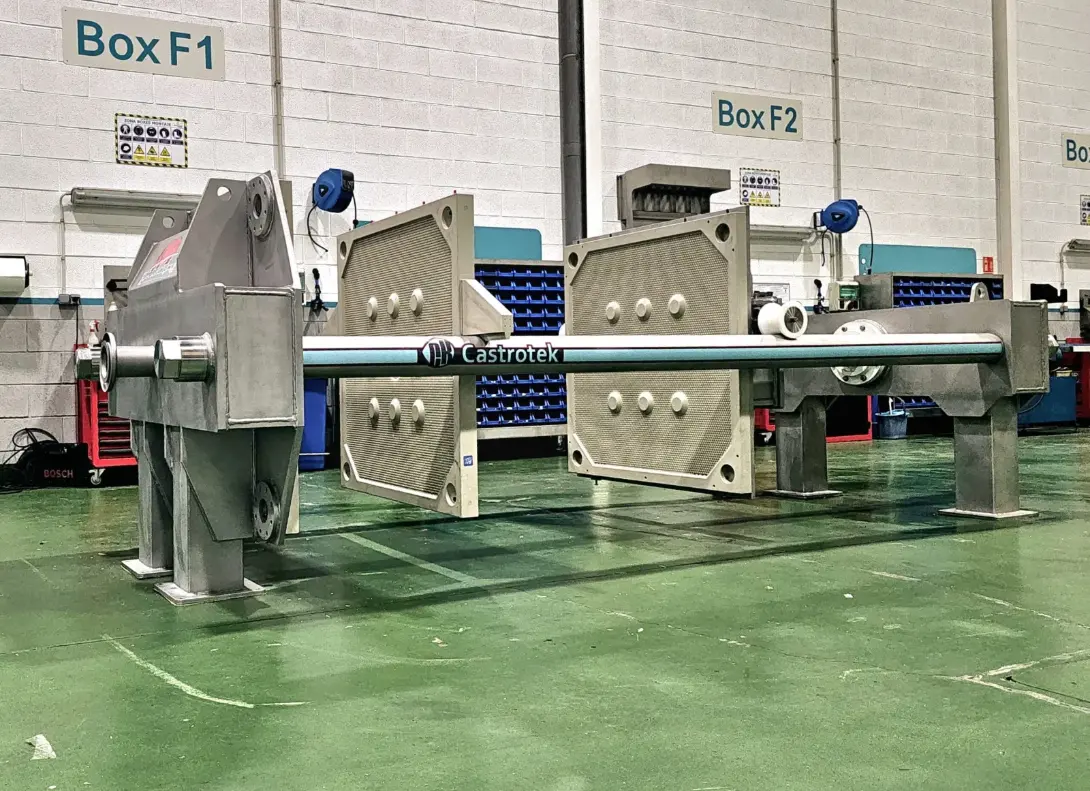
The Castrotek filter press separates solids from liquids by pressure filtration and turns sludge into a compact, dry cake with a solids content of 25% to 60% by weight. It is a solution for sludge filtration and dewatering stations that need to reduce waste volume and recover water continuously.
How it works
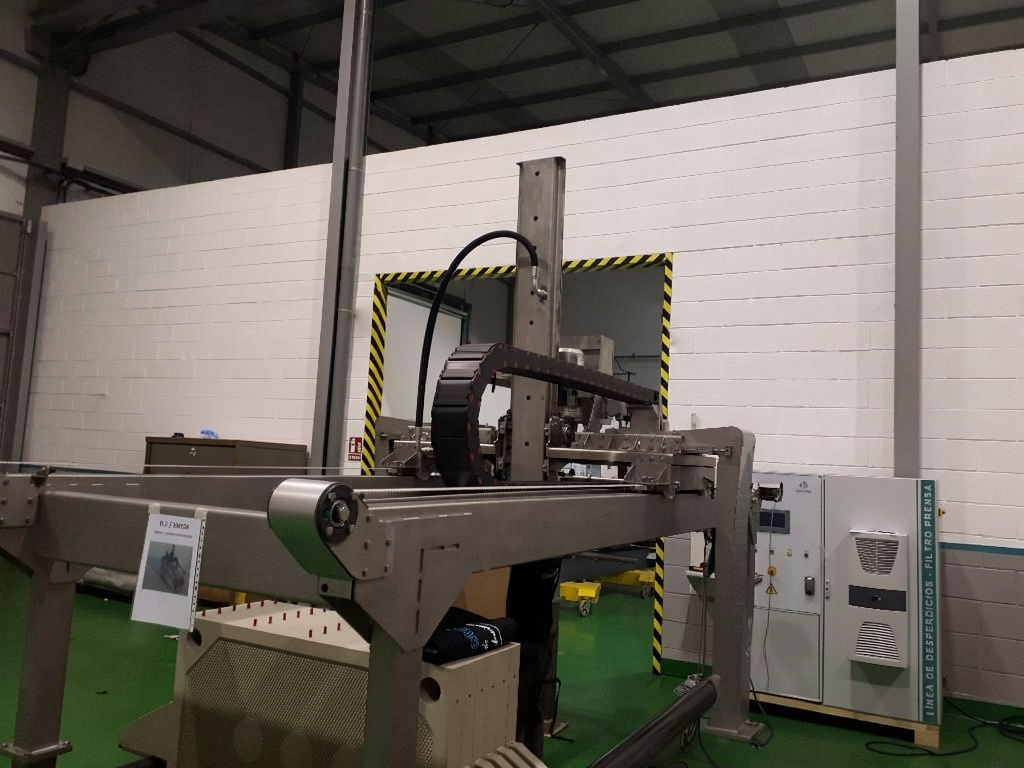
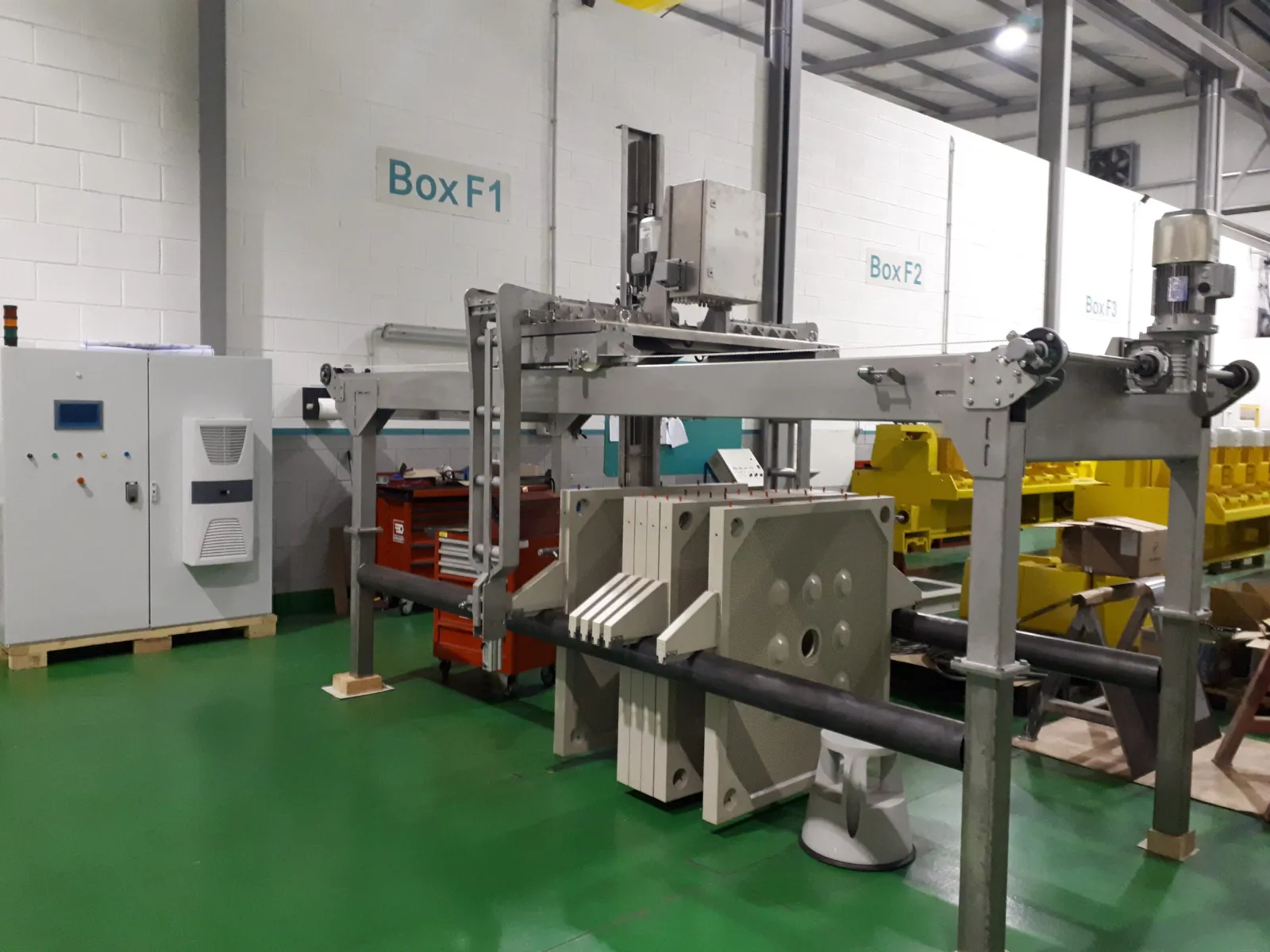
The sludge is pumped between the filter plates. As the pressure rises, the liquid passes through the filter cloths and the solids are retained. A hydraulic cylinder presses the plates together to expel the water. The automatic cleaning module then separates the plates one by one and the cake drops into the hopper and onto the belt conveyor. This allows the filter to run 24 hours a day without an operator.
Advantages
- Polypropylene plates and filter cloths adapted to each type of sludge.
- PLC control with touch screen and Siemens, Schneider and SMC components.
- Software with preventive maintenance control and remote access.
- Technical support via secure VPN, to solve issues remotely.
- CE marking and full documentation: manual, drawings, diagrams and warranty.
Technical data
| Feature | Value |
|---|---|
| Dimensions (length × height × width) | 7300 × 1250 × 1520 mm |
| Height with cleaning module | 3620 mm |
| Power supply | 400 V AC |
| Total power | 9.5 kW |
| Approximate weight | 9000 kg |
| Pneumatic pressure | 6 bar |
| Oil-hydraulic closing pressure | 270 bar |
| Filter plates | According to sludge flow |
Filter press: frequently asked questions
Who manufactures filter presses in Spain?
Castrotek builds automatic filter presses in O Porriño (Pontevedra, Spain) for dewatering industrial and natural stone sludge. They turn sludge into a cake with 25% to 60% solids, with automatic plate cleaning and PLC control, in models such as the CK 1200, CK 800 and CK 470.
What is a filter press used for?
It separates solids from liquids by pressure filtration. It turns sludge into a compact cake with 25% to 60% solids by weight, reducing waste volume and allowing water to be recovered.
Where is it used?
In filtration and dewatering stations for sludge from industrial processes. In the natural stone industry, it is part of the water treatment for polishing lines.
Is an operator needed to discharge the cake?
No. The automatic cleaning module separates the plates one by one with two pneumatic arms and strikes them to release the cake, which drops into the hopper and onto the belt conveyor. The filter can run 24 hours a day without an operator.
Which sizes are available?
We build several models, such as the CK 1200 and CK 800 with 20 filter plates and the CK 470 with 10 plates. The number of plates is sized according to the sludge flow.
What are the plates and filter cloths made of?
The filter plates are made of polypropylene. The cloths can be monofilament polypropylene, polyester or polyamide, depending on the nature of the sludge to be filtered.
How much power and space does it need?
The Hippopotamus 800/22 model measures 7300 × 1250 × 1520 mm (length × height × width), reaches 3620 mm in height with the cleaning module, weighs approximately 9000 kg and has a total power of 9.5 kW at 400 V.
How is it controlled?
Through an electrical cabinet with PLC and touch screen, using Siemens, Schneider and SMC components. All parameters can be adjusted to the filtration process, and our technical service can access it remotely through a secure VPN.