


Solid-liquid separation for food processing
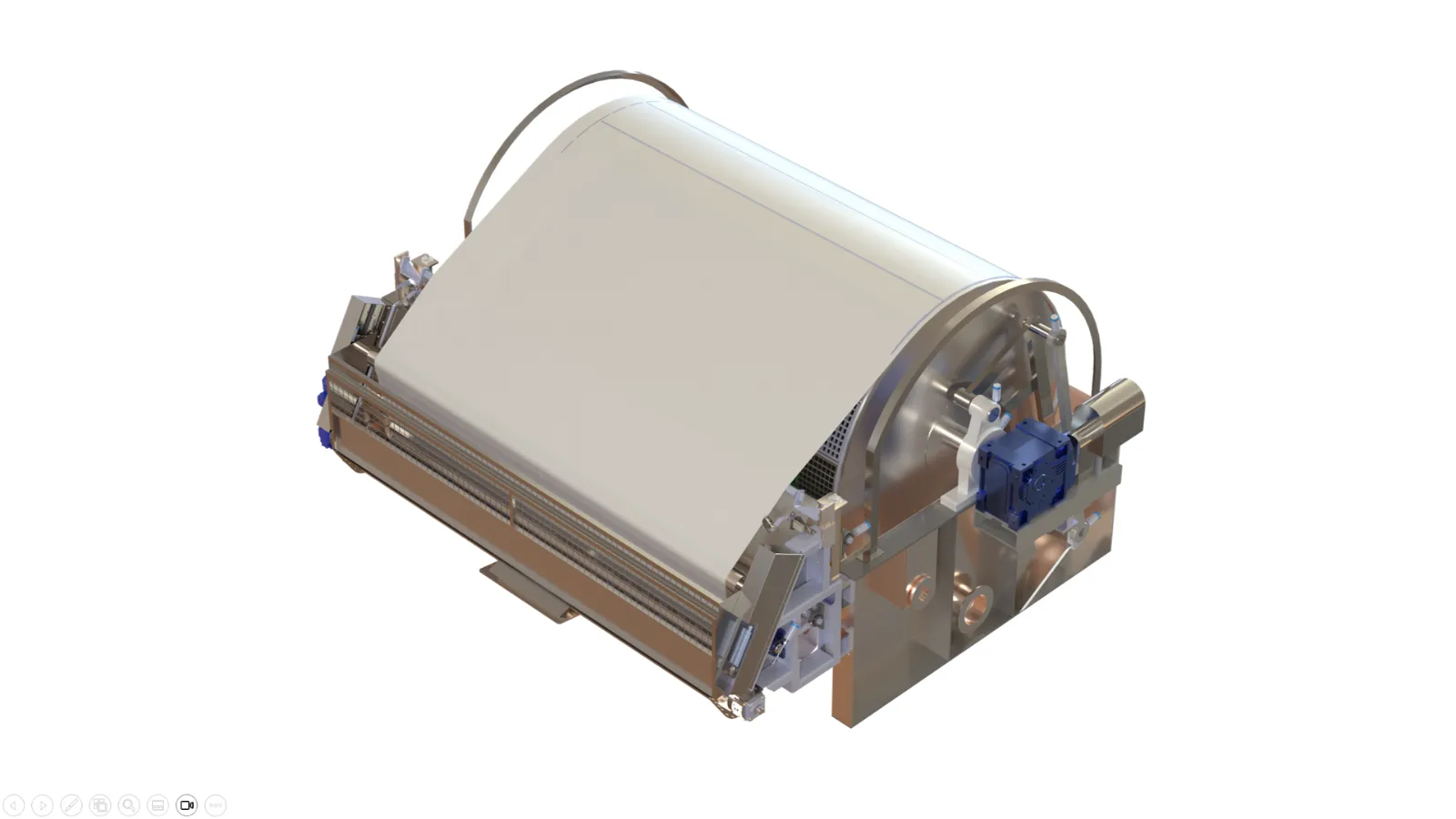
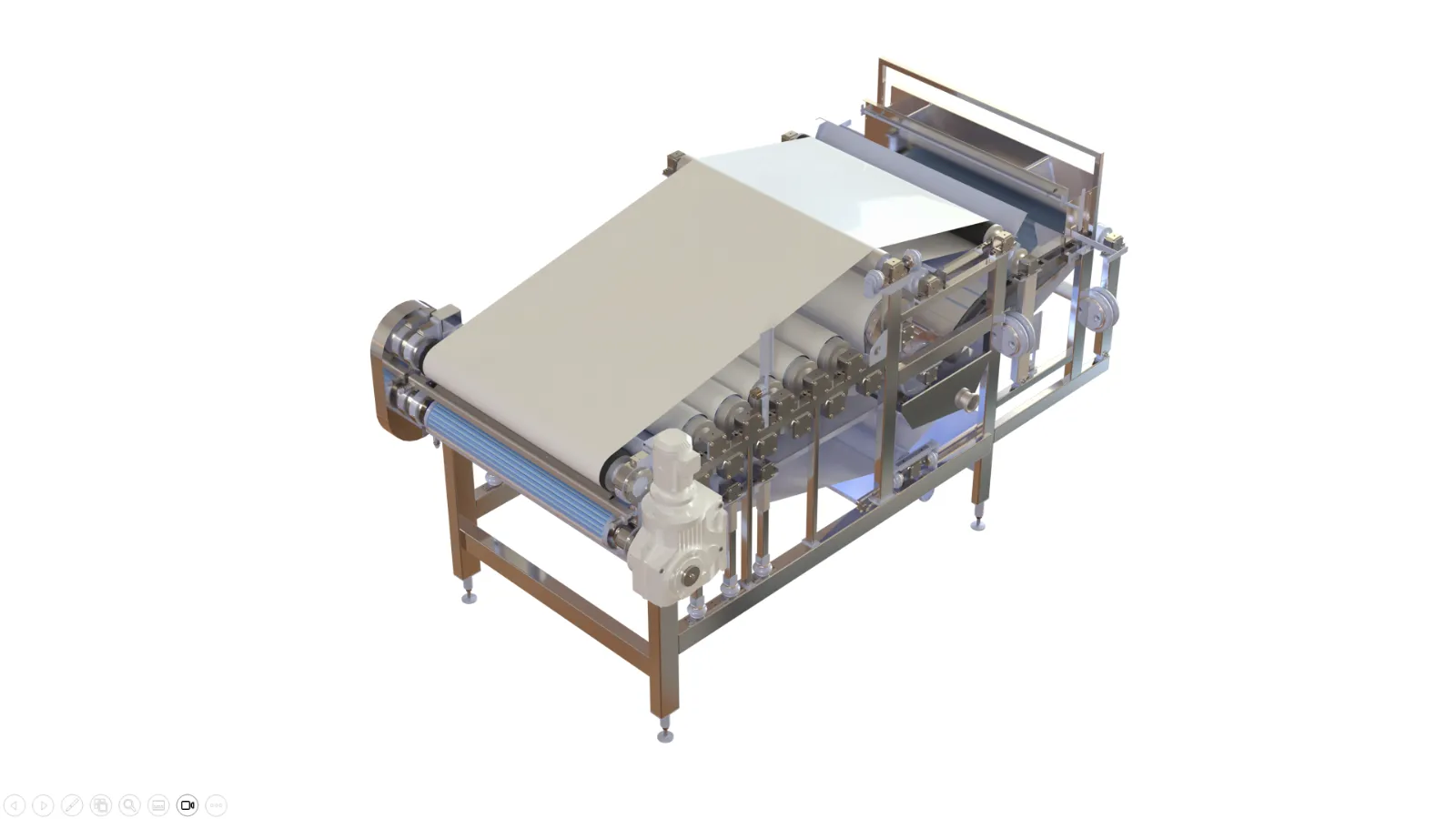
Castrotek designs filtration systems for the food industry, including rotary drum vacuum filters and belt presses. They are designed to separate solids and liquids continuously and efficiently.
How it works
The product is fed into the unit, which separates the liquid phase from the solid phase by filtration and pressing. In the rotary drum vacuum filter, the drum turns continuously while the vacuum draws the liquid through the filter cloth. In the belt press, the product passes between filter belts that squeeze it progressively to dewater it.
Advantages
- Automation and performance: equipment ready to run automatically.
- Continuous processing, without interrupting production.
- Efficient filtration and dewatering adapted to each product.
- Custom design according to the product, the flow rate and the process.
- Remote control: Castrotek technical support can assist remotely.
Main features
| Feature | Value |
|---|---|
| Sector | Food industry |
| Equipment | Rotary drum vacuum filters and belt presses |
| Process | Solid-liquid separation |
| Operation | Continuous |
| Configuration | Custom-built |
Food solid-liquid separation: frequently asked questions
Who manufactures vacuum filters and belt presses for the food industry in Spain?
Castrotek designs and builds rotary drum vacuum filters and belt presses in O Porriño (Pontevedra, Spain) to separate solids and liquids in food processing, running continuously and custom-built for each product, flow rate and process.
Which solid-liquid separation equipment does Castrotek build for the food industry?
Rotary drum vacuum filters and belt presses, designed to separate solids and liquids continuously and efficiently.
How does the rotary drum vacuum filter work?
The drum rotates continuously while the vacuum draws the liquid through the filter cloth.
And the belt press?
The product passes between filter belts that compress it progressively to dewater it.
Are they custom-designed?
Yes. They are designed for each product, flow rate and process, and are ready to run automatically and continuously without interrupting production.